A backyard putting green is one of those projects that sounds like a luxury until you price out what you currently spend on range fees and tee times, or until you watch your kids actually use it on a Tuesday evening. San Diego's climate makes it especially easy to justify, since a synthetic green is playable every month of the year with no mowing, no watering, and no brown patches in August. The question almost everyone starts with is what it costs, so let us start there and then get into what actually drives the number.
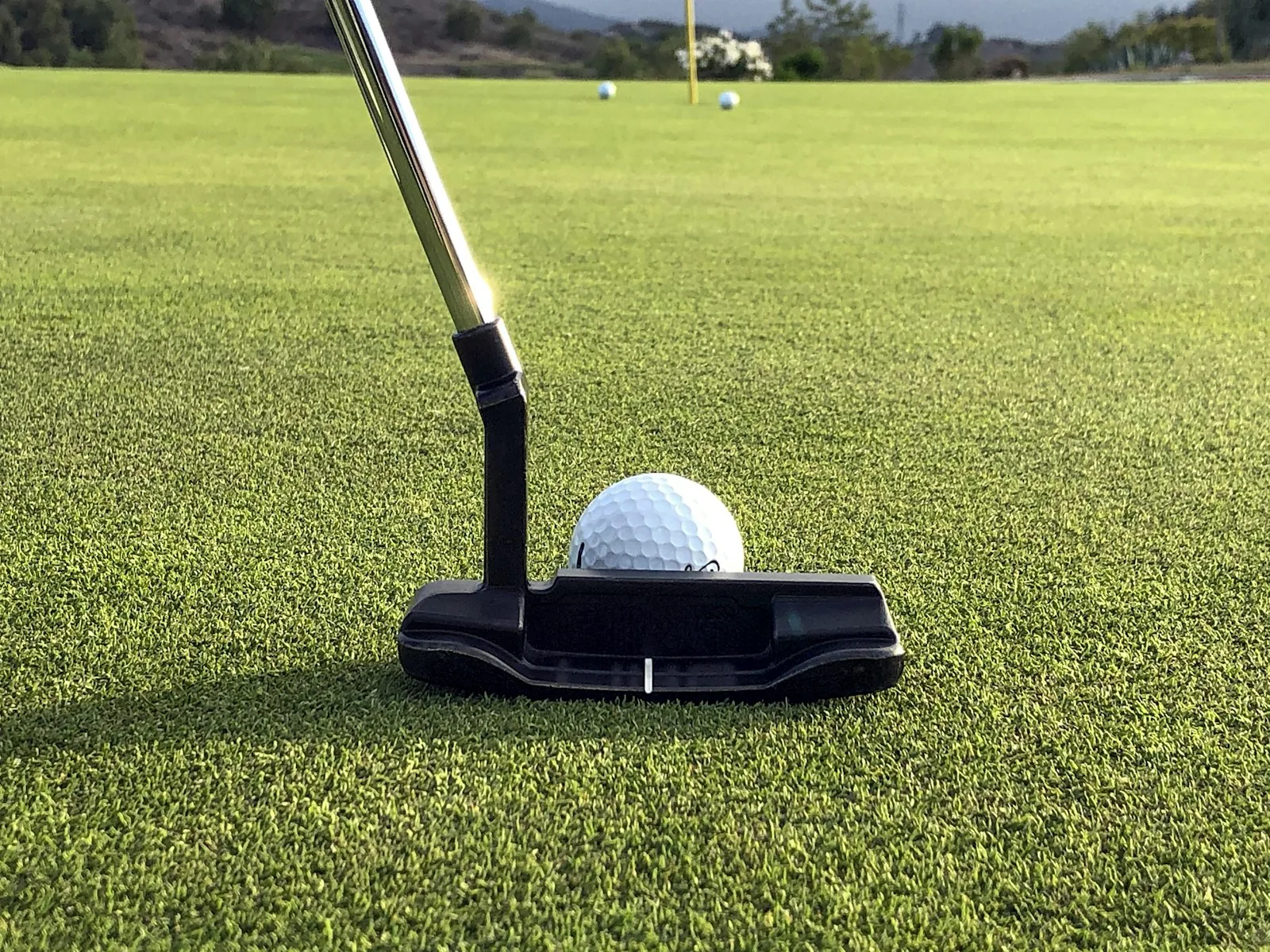
What a putting green costs in San Diego
Installed, a synthetic putting green in San Diego generally runs $20 to $30 per square foot. That is meaningfully more than a standard turf lawn, which lands closer to $11 to $26, and the gap is not a markup. A putting green is a more precise build, with specialized short-pile turf, a tightly engineered base, and contouring work that a flat lawn never requires.
Because greens are small, the total project cost is often lower than a full lawn even at the higher per-foot rate. A compact practice green of around 200 square feet typically falls between $4,000 and $6,000. A generous backyard green with a few holes and some shaping runs higher. The table below gives you realistic brackets.
| Green size | Typical use | Installed cost |
|---|---|---|
| ~150 to 250 sq ft | Single-hole practice, chipping | $4,000 to $6,500 |
| ~300 to 500 sq ft | Multi-hole backyard green | $7,000 to $13,000 |
| 600+ sq ft | Large green with fringe and breaks | $14,000 and up |
Why putting greens cost more than lawn turf
The price difference comes down to precision. A lawn needs to look good and drain well. A putting green needs to do those things and also roll true, which is a much higher bar that touches every layer of the build.
- Specialized turf. Putting surfaces use a dense, short-pile nylon turf engineered for consistent ball roll, not the taller polyethylene blades of a lawn. It is a different and more expensive material, and the fringe around the green often uses a second, longer turf to mimic the rough.
- A base built to tolerance. The crushed-rock base under a lawn needs to drain. The base under a green needs to drain and hold a precise, smooth contour, because every dip or high spot shows up in the roll. That is slower, more careful work.
- Cups, contours, and breaks. Regulation cups, intentional slope, and undulations are what make a green fun to play rather than a flat carpet. Shaping them well is a craft, and it is a big part of what you are paying a good installer for.
A green is far less forgiving than a lawn. Skimp on the base and you do not just get a yard that drains poorly, you get a surface that rolls inconsistently, which defeats the entire purpose. If a quote for a putting green looks suspiciously close to lawn-turf pricing, the installer is almost certainly planning to cut corners on the base or the turf spec.
What separates a good green from a frustrating one
Beyond the build quality, a few design choices decide whether you actually use the green or quietly regret it. Think about these before you sign anything.
- Stimp speed. Good installers can tune how fast the green plays by the turf and infill they choose. Tell them whether you want a faster, tournament-style roll or something more relaxed for the family.
- Number and placement of cups. More cups mean more variety of putts. Placement across different slopes keeps practice interesting.
- Fringe and surroundings. A ring of longer turf or a chipping pad around the green lets you practice short approach shots, not just putts, which dramatically increases how much you use it.
- Sun and siting. Synthetic surfaces warm up in direct San Diego sun. Siting a green with some afternoon shade, or planning around it, makes summer play more comfortable.
Maintenance is minimal, but not zero
A synthetic green asks very little of you. An occasional rinse to clear dust, a light brushing of the fringe to keep blades upright, and clearing leaves or debris is essentially the whole job. There is no mowing, rolling, or watering, which is exactly why a backyard green that would be a nightmare to maintain in real grass becomes trivial in turf. We cover turf upkeep in detail in our San Diego turf maintenance guide.
What to ask an installer
When you collect quotes, the questions that separate a serious builder from an order-taker are about the base and the turf, the same fundamentals that decide a lawn install but with even less room for error. Ask what base depth and material they use, what specific putting turf they install and at what pile height, how they build slope and breaks, and whether the fringe is a separate turf. An installer who answers those easily is showing you they build greens, not just lawns. For the broader vetting checklist, see our guide on how to choose a San Diego turf installer.